


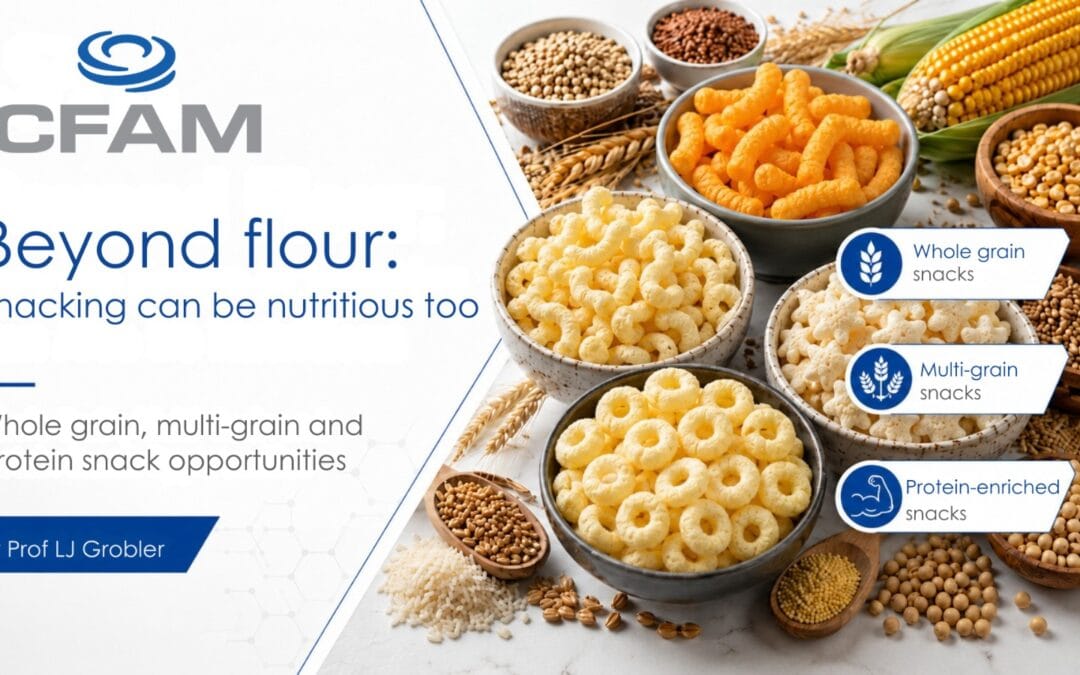
By Prof LJ Grobler, Director, CFAM Technologies
For many years, snacks have carried a bad reputation. They were often viewed as foods that tasted good but offered little nutritional value. Parents worried about too much fat and salt, nutritionists criticised their empty calories, and consumers accepted that enjoying a snack meant compromising on health.
That perception is beginning to change.
Today’s consumers still want snacks that are crunchy, tasty and convenient, but they increasingly expect more from the foods they eat. They want products with better ingredients, higher nutritional value and labels they can feel good about. They want foods that fit into healthier lifestyles without sacrificing enjoyment.
This shift in consumer thinking presents an enormous opportunity for African millers.
The snack market across Africa continues to grow. Urbanisation, changing lifestyles and younger populations are driving demand for foods that can be eaten on the move, packed into lunchboxes or enjoyed between meals. The reality is that consumers are going to continue snacking. The question is no longer whether people should snack. The real question is whether we can give them better snacks.
“Consumers will continue to snack. The opportunity is not stopping people from eating snacks, but giving them better snacks to eat.”
– Prof LJ Grobler
Traditionally, many expanded snacks have been produced using refined maize grits. These ingredients provide the light texture and crispness consumers enjoy. However, refining removes some of the fibre and nutrients naturally present in whole grains.
What if the same enjoyable texture could be achieved using more nutritious ingredients?
Advances in twin screw extrusion technology are making this possible.
One of the most exciting developments in recent years has been the ability to produce snacks using whole grain ingredients while maintaining the texture consumers expect. Historically, this has been difficult. Whole grains contain higher levels of fibre, which can interfere with expansion and produce denser products.
For this reason, manufacturers often relied on refined ingredients.
Twin screw extrusion changes that.
Through improved control of mixing, shear and processing conditions, twin screw extruders can successfully process whole grain formulations while producing snacks that remain light, crispy and enjoyable.
Consumers can therefore enjoy products with the same crunch and eating experience they love, while benefiting from improved nutritional profiles.
This is an important breakthrough.
“One of the most exciting developments in extrusion is our ability to produce whole grain snacks with the same consumer appeal as conventional snacks. We no longer have to choose between nutrition and enjoyment.”
– Prof LJ Grobler
The opportunities extend even further.
Protein has become one of the most sought-after nutritional benefits in modern foods. Consumers increasingly associate higher protein levels with energy, satiety and healthier lifestyles.
Twin screw extrusion allows snack manufacturers to incorporate protein-rich ingredients such as soy flour and other legume-based materials into snack formulations. The result is a new generation of products that do more than simply satisfy cravings.
They can contribute meaningful nutritional value.
Protein-enriched snacks can help consumers feel fuller for longer while supporting improved dietary quality. Parents looking for better lunchbox options, active consumers seeking healthier choices and families wanting greater value from their food purchases all represent growing markets for these products.
Another exciting opportunity lies in multi-grain snacks.
Africa is blessed with a diversity of grains. Maize, sorghum, millet, rice and wheat are widely cultivated across the continent. Each brings its own nutritional strengths, flavour characteristics and cultural significance.
By combining these grains, manufacturers can create products with improved nutrient diversity and unique taste profiles.
Multi-grain snacks also create opportunities to celebrate local agriculture. Instead of relying exclusively on imported product concepts, manufacturers can build brands around ingredients grown by African farmers and familiar to African consumers.
This strengthens local value chains while creating differentiated products that stand out in the marketplace.
Importantly, healthier snacks do not have to be boring.
Consumers choose snacks because they enjoy them. Taste, texture and appearance remain essential. No amount of nutritional messaging will compensate for a poor eating experience.
Extrusion technology provides manufacturers with enormous flexibility to address this challenge. Products can be developed in different shapes, sizes and textures. Seasonings can be adapted to local tastes. Expansion levels can be adjusted to create anything from airy puffs to dense, crunchy bites.
Nutrition and indulgence no longer need to be opposites.
The commercial opportunity for millers is substantial.
Snack products generally command higher margins than commodity products. They allow businesses to move beyond competing only on price and instead compete through innovation and brand development.
Millers can build brands associated with better ingredients, healthier choices and modern lifestyles. They can connect with parents seeking improved options for their children and younger consumers who increasingly expect products that align with their health aspirations.
For milling businesses looking to diversify, snacks offer an attractive entry point into value-added food manufacturing.
“The future of snacking belongs to companies that understand consumers want products that are both enjoyable and responsible. The winners will be those who make healthier choices easier and more appealing.”
– Prof LJ Grobler
Healthier snacks also align with broader public health goals. Improving the nutritional quality of foods that consumers already eat regularly can have a meaningful impact over time. No single product will solve Africa’s nutritional challenges, but making everyday foods better is an important step in the right direction.
Consumers are not going to stop snacking.
Children will continue asking for treats after school. Busy professionals will continue reaching for convenient foods between meetings. Families will continue sharing snacks during moments of connection and celebration.
The opportunity before the food industry is therefore not to eliminate snacks.
It is to reinvent them.
The future of African milling lies beyond flour. It lies in transforming local grains into products that deliver greater value, stronger brands and better nutrition.
Through twin screw extrusion, we now have the ability to produce whole grain snacks with the same appealing textures as traditional products, multi-grain snacks that celebrate Africa’s agricultural diversity, and higher-protein snacks that support healthier lifestyles.
Perhaps the future of snacking is not something we should fear.
Perhaps it is something we should embrace.
Because the future of snacking can be both delicious and nutritious.
And for African millers prepared to innovate, that future has already arrived.
#BeyondFlour #CFAMTechnologies #HealthySnacking #TwinScrewExtrusion #WholeGrainSnacks #ProteinSnacks #MultiGrainSnacks #FoodInnovation #FutureOfMilling #ValueAddition #AfricanFoodIndustry #MadeInAfrica #FoodManufacturing #NutritionInnovation #BetterSnacking


