


By Prof LJ Grobler
Director, CFAM Technologies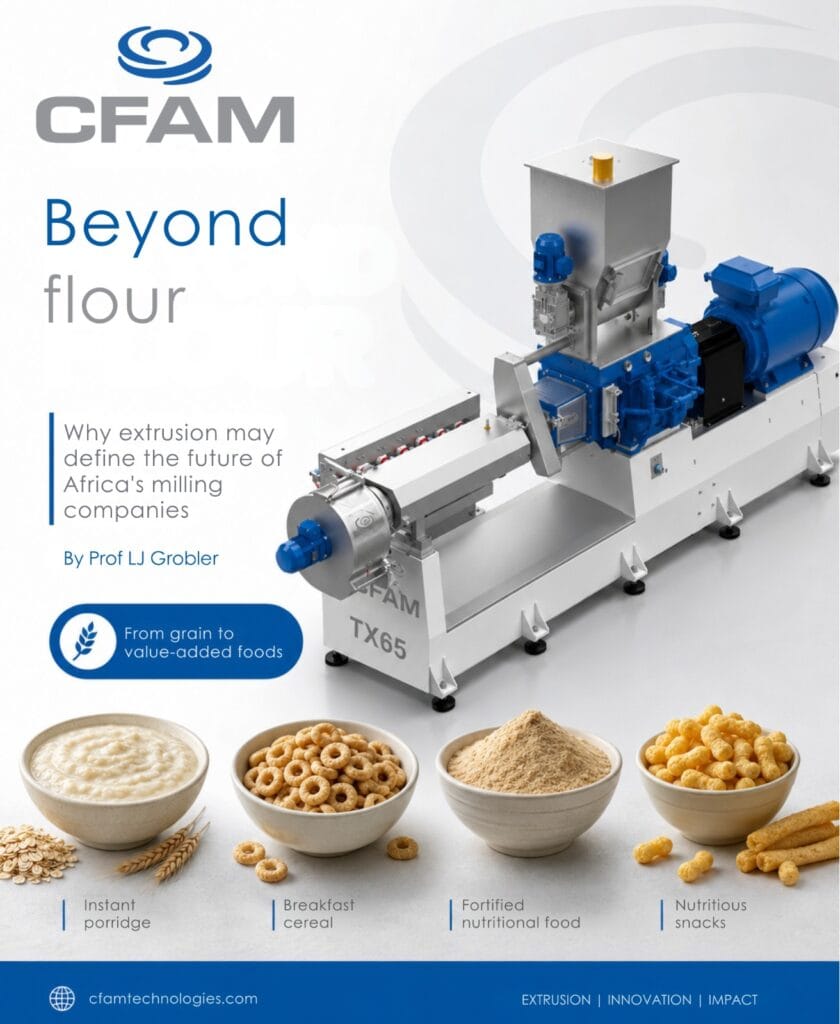
For generations, African millers have been central to feeding the continent, transforming locally grown grains into staple foods such as maize meal and wheat flour. Yet the environment in which millers operate is changing rapidly. Competition is increasing, margins are tightening, and consumers are demanding foods that are more nutritious, convenient and affordable.
The question facing today’s milling industry is simple: Can flour alone secure future growth and profitability? Increasingly, the answer is no. The future of milling will be determined not only by how efficiently grain is processed, but by how much value can be created from every tonne of grain. Extrusion technology provides one of the most powerful opportunities to achieve this transformation.
“Extrusion is one of the few technologies that allows us to simultaneously address profitability, food security and nutrition. It transforms simple grains into products that improve lives while building sustainable businesses.”
– Prof LJ Grobler
Traditionally, milling businesses have competed largely on price. Commodity products offer limited differentiation and expose businesses to fluctuating grain prices and shrinking margins. Consumers, however, are changing. Urbanisation, busy lifestyles and increased nutritional awareness are driving demand for foods that are affordable, convenient, safe and nutritious. Extrusion enables millers to respond to these trends by converting grains into a diverse range of value-added products, including instant porridges, breakfast cereals, fortified nutritional meals, children’s complementary foods and nutritious snacks. The same grain that once produced only flour can now create multiple products targeting different market segments.
In doing so, millers move from selling commodities to building brands.
Consumers buy brands because brands build trust. Trust creates loyalty, and loyalty drives sustainable growth. A bag of flour feeds a family, but a nutritional brand builds a business. One of the greatest opportunities lies in affordable nutrition. By combining locally available grains such as maize, sorghum, millet, wheat, rice and oats with legumes, manufacturers can create highly nutritious products at price points accessible to ordinary families. Affordable nutrition does not have to come from meat. Properly formulated multi-grain foods can provide improved protein quality, dietary fibre and essential micronutrients while remaining affordable and culturally acceptable.
Extrusion further improves food safety and digestibility. The cooking process reduces microbial contamination, improves starch digestibility and produces shelf-stable products that are easy to prepare. For consumers, this means safer foods, shorter preparation times and reduced cooking fuel requirements.
Another significant advantage is post-extrusion fortification. Many vitamins are sensitive to heat and may lose potency during conventional processing. By adding vitamins and minerals after extrusion, manufacturers protect heat-sensitive nutrients such as Vitamin C, folic acid and several B vitamins. The result is improved vitamin retention, better nutritional consistency and enhanced health outcomes.
“The future of nutrition in Africa will not be built solely through expensive ingredients. It will be built through intelligent use of the grains and crops we already grow, transformed through technologies such as extrusion into foods people can access every day.”
– Prof LJ Grobler
However, successful diversification requires more than purchasing equipment. Technology alone does not create successful businesses. Market understanding, product development, pilot trials, financial planning, operator training and ongoing support are equally important. At CFAM Technologies, we believe our role extends beyond supplying machinery. We partner with clients throughout the entire journey, from concept development to commercial success.
“The most important machine in a new food business is not the extruder. It is the system of knowledge, people and processes that transforms technology into sustainable success.”
– Prof LJ Grobler
Pilot trials remain a critical part of this process. They allow businesses to validate formulations, optimise processing conditions, assess consumer acceptance and develop realistic financial projections before major investments are made. Simply put, pilot trials save companies millions. Africa also presents unique manufacturing realities, including raw material variability, utility interruptions and complex supply chains. Solutions designed elsewhere often require adaptation before they succeed locally. CFAM’s technologies have evolved through decades of practical application across the continent and are built to be reliable, maintainable and sustainable under African conditions.
The African miller of the future will be more than a commodity processor. They will be food manufacturers, nutrition providers, brand builders and product innovators. They will contribute not only to food security, but also to healthier communities and stronger economies. The opportunity before the industry is extraordinary. It is not about processing more grain. It is about creating more value from every tonne, delivering better nutrition to every family and building resilient businesses prepared for the future.
Extrusion provides the bridge between where African milling has been and where it can go. The future belongs to those who recognise that grain is not merely a commodity, but the starting point for innovation, nutrition and sustainable growth.
The future of African milling lies beyond flour.


