


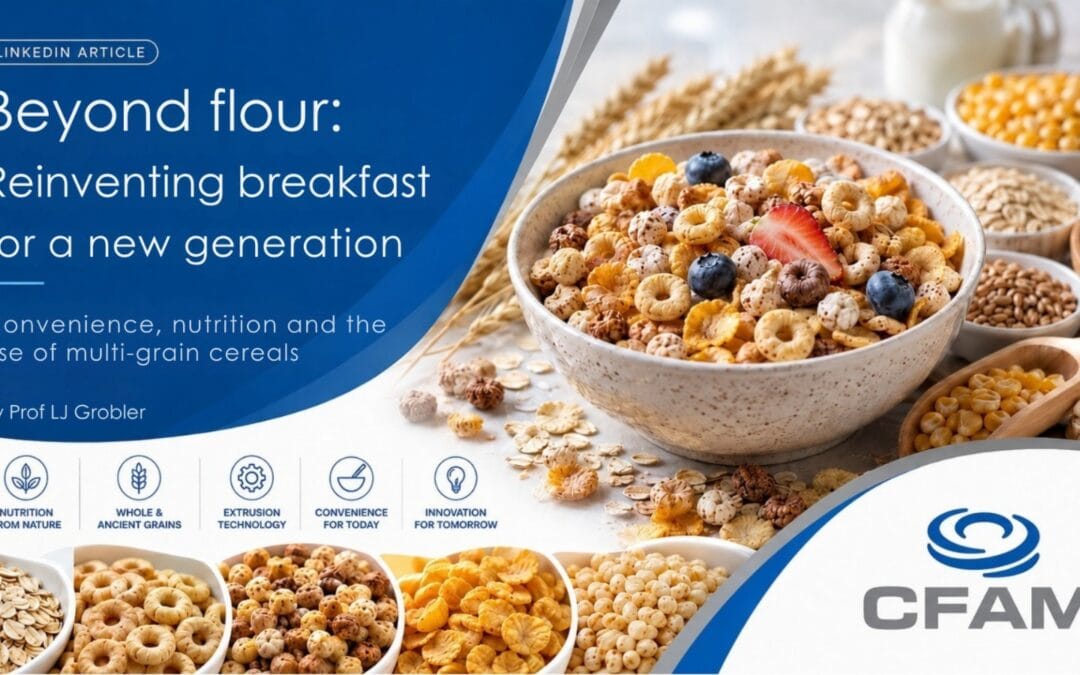
Convenience, Nutrition and the Rise of Multi-Grain Cereals
Breakfast has long been regarded as the most important meal of the day, yet it is increasingly becoming the meal that many people struggle to prioritise. Busy mornings, long commutes, school schedules and demanding work environments mean that consumers are looking for breakfast solutions that are both convenient and nutritious. They want foods that fit into modern lifestyles without compromising their health and wellbeing.
This changing consumer behaviour presents an exciting opportunity for African millers. Breakfast cereals have evolved from simple convenience foods into nutritional platforms capable of delivering meaningful health benefits while creating strong consumer brands. Through extrusion technology, millers can move beyond traditional flour products and enter one of the fastest-growing segments of the value-added food market.
“Breakfast cereals have evolved from being simply convenient foods into nutritional platforms that allow us to deliver health, wellness and enjoyment in a format that fits modern lifestyles.” – Prof LJ Grobler
One of the greatest strengths of breakfast cereals is their versatility. Using extrusion technology, manufacturers can produce a wide variety of products, including flakes, puffed cereals, O-tees, balls, crispies, bran sticks and shredded cereals. Products can be designed for children or adults, positioned as indulgent treats or marketed as highly nutritious breakfast solutions. A single production platform can therefore serve multiple market segments.
Increasingly, consumers are looking beyond products made from a single refined grain. They are seeking foods that offer greater diversity and improved nutritional value. This has fuelled the growing popularity of multi-grain breakfast cereals.
By combining grains such as maize, oats, wheat, rice, sorghum and millet, manufacturers can create products that offer broader nutritional benefits and more interesting flavour experiences. Oats contribute soluble fibre and satiety, maize provides familiar taste and excellent processing characteristics, while sorghum and millet bring valuable micronutrients and a connection to Africa’s agricultural heritage.
Multi-grain cereals allow consumers to enjoy the benefits of grain diversity in a convenient and appealing format. At the same time, they provide manufacturers with opportunities to differentiate their products and build stronger brands.
Another major trend reshaping the breakfast cereal category is the growing interest in whole grains. Unlike refined grains, whole grains retain the bran, germ and endosperm, preserving much of the grain’s natural nutritional goodness.
Whole grains provide dietary fibre that supports digestive health and contributes to feelings of fullness. They also contain naturally occurring vitamins, minerals and plant compounds that form part of healthy dietary patterns. For many consumers, increasing whole grain consumption has become an important personal health goal.
Breakfast cereals provide one of the simplest and most convenient ways to incorporate whole grains into everyday diets.
“Whole grains remind us that nature often packages nutrition perfectly. Our role as food manufacturers is to preserve those benefits while delivering products consumers genuinely enjoy eating.” – Prof LJ Grobler
Alongside whole grains, ancient grains are also finding their way back onto breakfast tables around the world. Ancient grains are varieties that have remained relatively unchanged over centuries and are increasingly valued for their nutritional richness, authenticity and diversity.
For Africa, this trend presents a unique opportunity. Grains such as sorghum and millet have nourished communities across the continent for generations. Today, they are being rediscovered by consumers seeking foods that are wholesome, natural and connected to traditional food heritage.
Ancient grains often contain valuable dietary fibre, minerals and naturally occurring antioxidants. They also introduce distinctive flavours and textures that help products stand out in crowded markets. By incorporating these grains into breakfast cereals, African millers can create products that are both innovative and authentically African.
This approach not only supports local farmers but also allows manufacturers to celebrate Africa’s own agricultural story.
Importantly, nutritious cereals must still deliver enjoyment. Consumers expect breakfast cereals to remain crunchy in milk, visually appealing and enjoyable to eat. Health benefits alone are rarely enough to secure long-term success.
Modern extrusion technology allows manufacturers to achieve this balance. Twin screw extrusion provides the flexibility to process a wide range of ingredients, including whole grains and ancient grains, while maintaining the textures consumers love. The result is a new generation of breakfast cereals that successfully combines convenience, nutrition and sensory appeal.
For millers, the commercial opportunities are significant. Breakfast cereals typically command higher margins than commodity products and offer strong opportunities for brand development. Through innovation in ingredients, flavours and nutritional positioning, businesses can move beyond competing solely on price and instead compete through consumer relevance and trust.
“The breakfast table has become one of the most important places where food manufacturers can influence health. If we can make nutritious choices convenient and enjoyable, consumers will embrace them.” – Prof LJ Grobler
Consumers will continue looking for breakfast solutions that fit their busy lives. Parents will continue searching for better options for their children, while adults seek practical ways to improve their own diets.
The opportunity before African millers is therefore not simply to manufacture breakfast cereals. It is to redefine what breakfast can be.
The future of African milling lies beyond flour. It lies in transforming local grains into products that deliver convenience, nutrition and enjoyment in equal measure. Through extrusion technology, we can produce multi-grain cereals that celebrate diversity, whole grain cereals that preserve nature’s goodness, and ancient grain cereals that reconnect consumers with the wisdom of traditional foods.
The future of breakfast is not only faster.
It is smarter. It is healthier. And for African millers prepared to innovate, that future is already sitting at the breakfast table.


