deur Caren Van Der Walt | Jun 24, 2026 | Blog
Convenience, Nutrition and the Rise of Multi-Grain Cereals
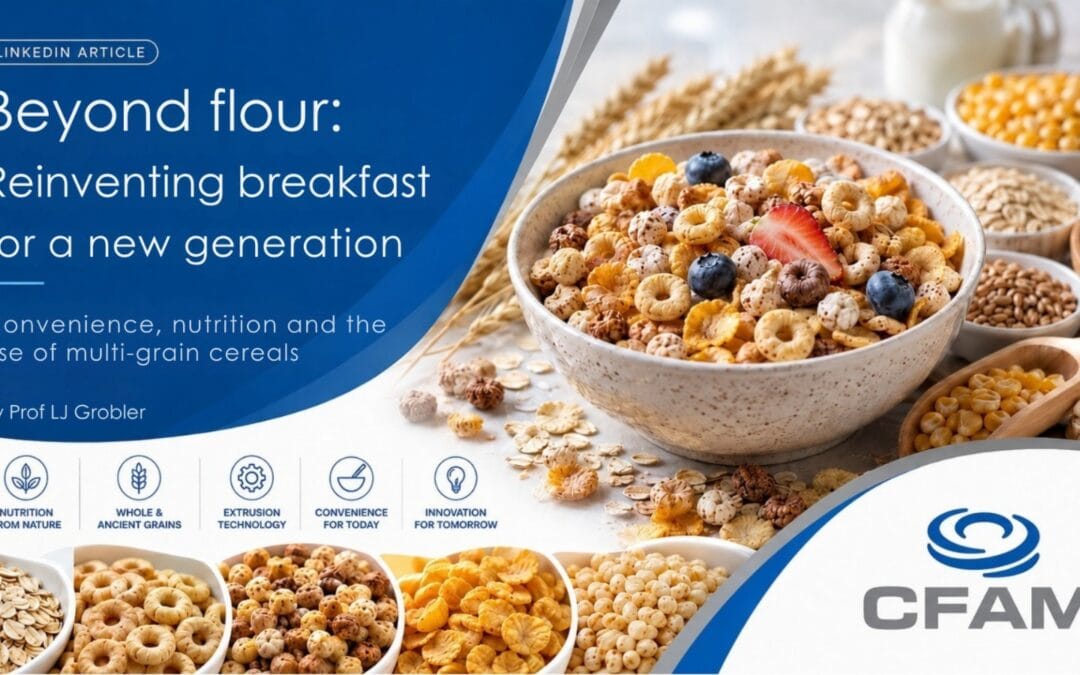
Breakfast has long been regarded as the most important meal of the day, yet it is increasingly becoming the meal that many people struggle to prioritise. Busy mornings, long commutes, school schedules and demanding work environments mean that consumers are looking for breakfast solutions that are both convenient and nutritious. They want foods that fit into modern lifestyles without compromising their health and wellbeing.
This changing consumer behaviour presents an exciting opportunity for African millers. Breakfast cereals have evolved from simple convenience foods into nutritional platforms capable of delivering meaningful health benefits while creating strong consumer brands. Through extrusion technology, millers can move beyond traditional flour products and enter one of the fastest-growing segments of the value-added food market.
“Breakfast cereals have evolved from being simply convenient foods into nutritional platforms that allow us to deliver health, wellness and enjoyment in a format that fits modern lifestyles.” – Prof LJ Grobler
One of the greatest strengths of breakfast cereals is their versatility. Using extrusion technology, manufacturers can produce a wide variety of products, including flakes, puffed cereals, O-tees, balls, crispies, bran sticks and shredded cereals. Products can be designed for children or adults, positioned as indulgent treats or marketed as highly nutritious breakfast solutions. A single production platform can therefore serve multiple market segments.
Increasingly, consumers are looking beyond products made from a single refined grain. They are seeking foods that offer greater diversity and improved nutritional value. This has fuelled the growing popularity of multi-grain breakfast cereals.
By combining grains such as maize, oats, wheat, rice, sorghum and millet, manufacturers can create products that offer broader nutritional benefits and more interesting flavour experiences. Oats contribute soluble fibre and satiety, maize provides familiar taste and excellent processing characteristics, while sorghum and millet bring valuable micronutrients and a connection to Africa’s agricultural heritage.
Multi-grain cereals allow consumers to enjoy the benefits of grain diversity in a convenient and appealing format. At the same time, they provide manufacturers with opportunities to differentiate their products and build stronger brands.
Another major trend reshaping the breakfast cereal category is the growing interest in whole grains. Unlike refined grains, whole grains retain the bran, germ and endosperm, preserving much of the grain’s natural nutritional goodness.
Whole grains provide dietary fibre that supports digestive health and contributes to feelings of fullness. They also contain naturally occurring vitamins, minerals and plant compounds that form part of healthy dietary patterns. For many consumers, increasing whole grain consumption has become an important personal health goal.
Breakfast cereals provide one of the simplest and most convenient ways to incorporate whole grains into everyday diets.
“Whole grains remind us that nature often packages nutrition perfectly. Our role as food manufacturers is to preserve those benefits while delivering products consumers genuinely enjoy eating.” – Prof LJ Grobler
Alongside whole grains, ancient grains are also finding their way back onto breakfast tables around the world. Ancient grains are varieties that have remained relatively unchanged over centuries and are increasingly valued for their nutritional richness, authenticity and diversity.
For Africa, this trend presents a unique opportunity. Grains such as sorghum and millet have nourished communities across the continent for generations. Today, they are being rediscovered by consumers seeking foods that are wholesome, natural and connected to traditional food heritage.
Ancient grains often contain valuable dietary fibre, minerals and naturally occurring antioxidants. They also introduce distinctive flavours and textures that help products stand out in crowded markets. By incorporating these grains into breakfast cereals, African millers can create products that are both innovative and authentically African.
This approach not only supports local farmers but also allows manufacturers to celebrate Africa’s own agricultural story.
Importantly, nutritious cereals must still deliver enjoyment. Consumers expect breakfast cereals to remain crunchy in milk, visually appealing and enjoyable to eat. Health benefits alone are rarely enough to secure long-term success.
Modern extrusion technology allows manufacturers to achieve this balance. Twin screw extrusion provides the flexibility to process a wide range of ingredients, including whole grains and ancient grains, while maintaining the textures consumers love. The result is a new generation of breakfast cereals that successfully combines convenience, nutrition and sensory appeal.
For millers, the commercial opportunities are significant. Breakfast cereals typically command higher margins than commodity products and offer strong opportunities for brand development. Through innovation in ingredients, flavours and nutritional positioning, businesses can move beyond competing solely on price and instead compete through consumer relevance and trust.
“The breakfast table has become one of the most important places where food manufacturers can influence health. If we can make nutritious choices convenient and enjoyable, consumers will embrace them.” – Prof LJ Grobler
Consumers will continue looking for breakfast solutions that fit their busy lives. Parents will continue searching for better options for their children, while adults seek practical ways to improve their own diets.
The opportunity before African millers is therefore not simply to manufacture breakfast cereals. It is to redefine what breakfast can be.
The future of African milling lies beyond flour. It lies in transforming local grains into products that deliver convenience, nutrition and enjoyment in equal measure. Through extrusion technology, we can produce multi-grain cereals that celebrate diversity, whole grain cereals that preserve nature’s goodness, and ancient grain cereals that reconnect consumers with the wisdom of traditional foods.
The future of breakfast is not only faster.
It is smarter. It is healthier. And for African millers prepared to innovate, that future is already sitting at the breakfast table.
deur Caren Van Der Walt | Jun 17, 2026 | Blog
By Prof LJ Grobler, Director, CFAM Technologies
Africa stands at an important crossroads. The continent’s population continues to grow rapidly, urban lifestyles are changing, and consumers are demanding foods that are not only affordable, but also safe, nutritious and convenient. At the same time, rising food prices and increasing pressure on household budgets mean that millions of families struggle to access the quality nutrition they need every day. The challenge before us is therefore not simply producing more food. It is producing better food.
For decades, African millers have played a critical role in ensuring food security. They have built successful businesses by converting locally grown grains into staple products such as maize meal and wheat flour. These products remain essential to the diets of millions of people. However, the future of food manufacturing requires us to think differently. The question facing our industry today is whether we can use the crops we already produce to create foods that offer greater nutritional value, greater convenience and greater affordability. I believe we can, and that extrusion technology provides one of the most powerful tools to achieve this transformation.
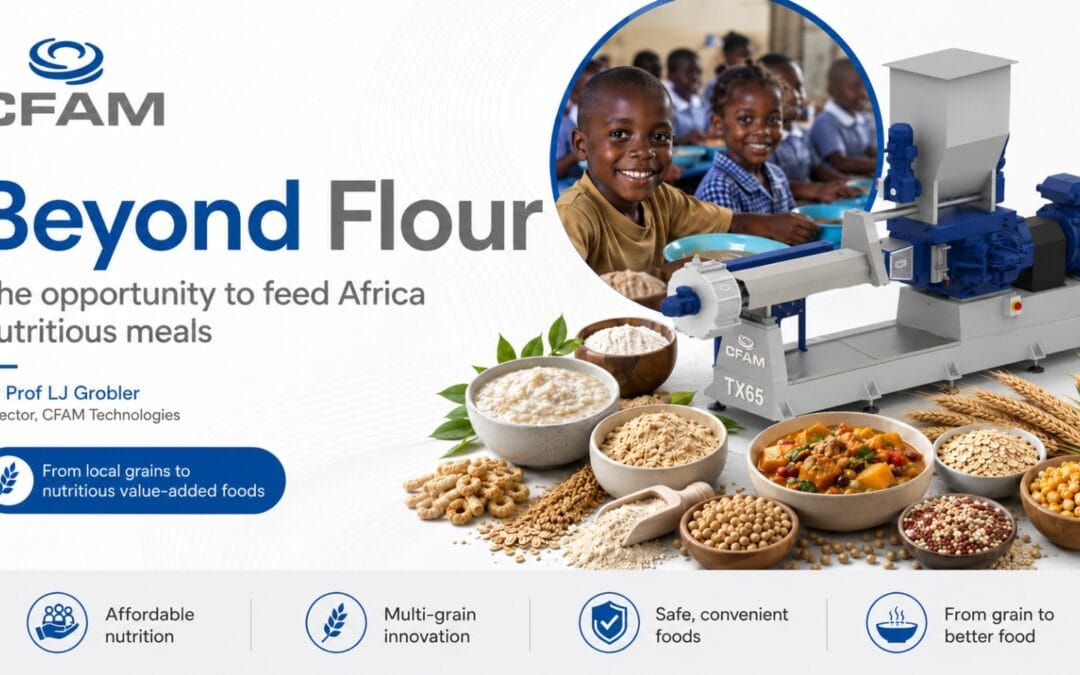
Many people associate extrusion with breakfast cereals or snack foods. In reality, extrusion is one of the most versatile food processing technologies available. It allows us to transform grains and legumes into complete nutritional solutions designed to meet the needs of different consumers. Through extrusion, ordinary agricultural crops can be converted into instant porridges, nutritious multi-grain meals, complementary foods for infants, school feeding products and even stew-like formulations that provide a satisfying meal experience.
“Extrusion allows us to convert the grains that Africa already grows into safe, nutritious and affordable foods that can improve lives on a massive scale. It is technology with both commercial and social impact.”
– Prof LJ Grobler
One of Africa’s greatest strengths lies in the diversity of crops grown across the continent. Maize, sorghum, millet, rice, wheat and oats are widely cultivated, while legumes such as soybeans, cowpeas and Bambara groundnuts provide valuable sources of plant protein. Individually, these ingredients offer important nutritional benefits. Combined intelligently, they become even more powerful.
By blending grains and legumes, food manufacturers can develop multi-grain products with improved nutritional profiles. Protein quality can be enhanced through complementary amino acid patterns. Fibre levels can be increased. Minerals and naturally occurring vitamins can be improved. Flavour diversity can be expanded, while dependence on a single crop is reduced. Most importantly, these products can be manufactured using ingredients that are locally available and familiar to consumers.
This is particularly important when considering affordability. For many households, meat remains one of the most expensive components of the family food basket. While animal proteins provide excellent nutrition, they are often consumed less frequently because of their cost. Well-designed multi-grain formulations offer an opportunity to bridge this nutritional gap. They do not seek to replace meat entirely but rather provide affordable alternatives that deliver meaningful nutritional benefits to families who may not have regular access to expensive protein sources.
Extrusion makes this possible while also improving food safety. The combination of heat, pressure and mechanical energy used during the process reduces microbial contamination and produces shelf-stable products with excellent keeping qualities. The process also gelatinises starch and modifies protein structures, improving digestibility and making nutrients more accessible to the body. For consumers, this means products that are not only safer to consume, but also easier to prepare and digest.
Convenience has become one of the defining characteristics of modern food consumption. Working parents have less time available for meal preparation. School feeding programmes require products that can be prepared consistently and efficiently. Institutional kitchens demand reliability and simplicity. Extruded products address these needs by significantly reducing cooking times. Instant porridges can be prepared within minutes, while more substantial meal formulations require far less energy and labour than traditional alternatives. Reduced cooking requirements also mean lower fuel costs, an often overlooked but important advantage for low-income households.
One of the most remarkable aspects of extrusion is its flexibility. Products can be developed to suit almost any nutritional objective. Smooth instant porridges can be formulated for infants and young children. Thick, hearty meals can be designed for adults. Products with stew-like textures can provide consumers with familiar eating experiences while delivering enhanced nutritional benefits. Energy density, protein content, fibre levels and micronutrient profiles can all be adjusted to meet specific needs.
Whether the objective is a school feeding meal, a maternal nutrition product, an emergency relief ration, a complementary food for children or a specialised institutional formulation, extrusion provides the ability to meet precise nutritional specifications.
“Extrusion allows us to formulate foods to meet almost any nutritional specification while maintaining affordability and consumer acceptability. That combination is incredibly powerful.”
– Prof LJ Grobler
Another major advantage of extrusion lies in the opportunity for post-extrusion fortification. Many vitamins are sensitive to heat and may lose potency during conventional cooking processes. Nutrients such as Vitamin C, folic acid and several B vitamins can degrade when exposed to elevated temperatures, reducing their effectiveness.
By applying vitamins and minerals after the extrusion cooking process has been completed, manufacturers can significantly improve nutrient retention. Specialised coating systems allow micronutrients to be added accurately once the product has cooled. The benefits are substantial. Heat-sensitive vitamins are better protected, nutritional consistency improves, and consumers receive products that deliver the nutritional benefits intended by the manufacturer.
Simply put, the vitamins that go into the product are the vitamins that reach the consumer.
The implications extend far beyond technology. Governments seeking to strengthen school feeding programmes gain access to more effective nutritional solutions. Humanitarian organisations can provide shelf-stable products capable of delivering targeted nutrition to vulnerable populations. Food manufacturers can differentiate themselves by building brands associated with health, convenience and trust. Millers can move beyond commodities and create greater value from the grains they already process.
For consumers, the impact is even more profound. Families gain access to foods that are nutritious, affordable and practical. Children receive better nutrition during critical stages of development. Communities benefit from improved health outcomes. Better nutrition contributes to better educational performance, greater productivity and stronger societies.
“The future of food in Africa is not simply about producing more. It is about producing better. By combining local grains, nutritional science and extrusion technology, we can build businesses that are profitable while helping to create a healthier continent.”
– Prof LJ Grobler
Africa already possesses many of the ingredients required to achieve this vision. We grow the grains. We understand the nutritional challenges. We have entrepreneurs capable of innovation and businesses willing to invest in the future.
What is required now is the willingness to think beyond traditional boundaries.
The future of African food manufacturing lies beyond flour. It lies in transforming local agricultural resources into safe, affordable and nutritious meals that improve lives while creating sustainable business opportunities. Through extrusion technology, we could meet the nutritional needs of diverse populations, protect vulnerable nutrients through post-extrusion fortification, and develop products that compete successfully with more expensive food alternatives.
The opportunity before us is extraordinary.
The future is not simply about feeding more people.
It is about nourishing them better.
And through extrusion, that future is already within our reach.
deur Caren Van Der Walt | Jun 11, 2026 | Blog
By Prof LJ Grobler
Director, CFAM Technologies
For generations, African millers have been central to feeding the continent, transforming locally grown grains into staple foods such as maize meal and wheat flour. Yet the environment in which millers operate is changing rapidly. Competition is increasing, margins are tightening, and consumers are demanding foods that are more nutritious, convenient and affordable.
The question facing today’s milling industry is simple: Can flour alone secure future growth and profitability? Increasingly, the answer is no. The future of milling will be determined not only by how efficiently grain is processed, but by how much value can be created from every tonne of grain. Extrusion technology provides one of the most powerful opportunities to achieve this transformation.
“Extrusion is one of the few technologies that allows us to simultaneously address profitability, food security and nutrition. It transforms simple grains into products that improve lives while building sustainable businesses.”
– Prof LJ Grobler
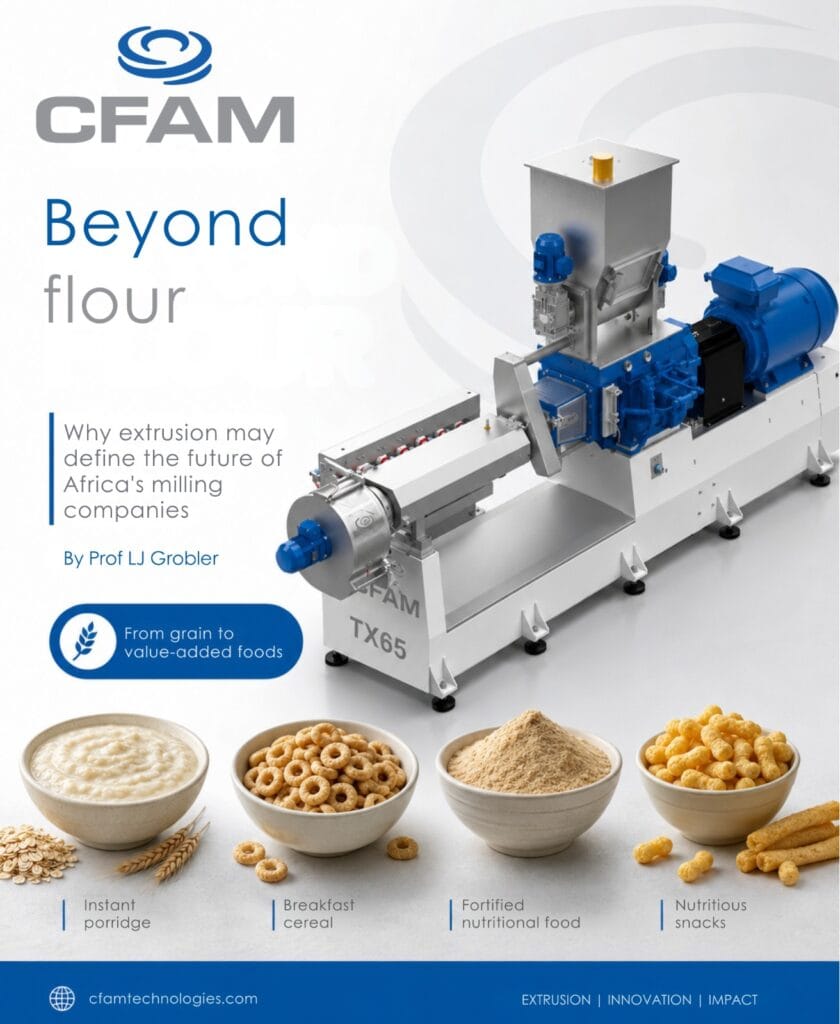
Traditionally, milling businesses have competed largely on price. Commodity products offer limited differentiation and expose businesses to fluctuating grain prices and shrinking margins. Consumers, however, are changing. Urbanisation, busy lifestyles and increased nutritional awareness are driving demand for foods that are affordable, convenient, safe and nutritious. Extrusion enables millers to respond to these trends by converting grains into a diverse range of value-added products, including instant porridges, breakfast cereals, fortified nutritional meals, children’s complementary foods and nutritious snacks. The same grain that once produced only flour can now create multiple products targeting different market segments.
In doing so, millers move from selling commodities to building brands.
Consumers buy brands because brands build trust. Trust creates loyalty, and loyalty drives sustainable growth. A bag of flour feeds a family, but a nutritional brand builds a business. One of the greatest opportunities lies in affordable nutrition. By combining locally available grains such as maize, sorghum, millet, wheat, rice and oats with legumes, manufacturers can create highly nutritious products at price points accessible to ordinary families. Affordable nutrition does not have to come from meat. Properly formulated multi-grain foods can provide improved protein quality, dietary fibre and essential micronutrients while remaining affordable and culturally acceptable.
Extrusion further improves food safety and digestibility. The cooking process reduces microbial contamination, improves starch digestibility and produces shelf-stable products that are easy to prepare. For consumers, this means safer foods, shorter preparation times and reduced cooking fuel requirements.
Another significant advantage is post-extrusion fortification. Many vitamins are sensitive to heat and may lose potency during conventional processing. By adding vitamins and minerals after extrusion, manufacturers protect heat-sensitive nutrients such as Vitamin C, folic acid and several B vitamins. The result is improved vitamin retention, better nutritional consistency and enhanced health outcomes.
“The future of nutrition in Africa will not be built solely through expensive ingredients. It will be built through intelligent use of the grains and crops we already grow, transformed through technologies such as extrusion into foods people can access every day.”
– Prof LJ Grobler
However, successful diversification requires more than purchasing equipment. Technology alone does not create successful businesses. Market understanding, product development, pilot trials, financial planning, operator training and ongoing support are equally important. At CFAM Technologies, we believe our role extends beyond supplying machinery. We partner with clients throughout the entire journey, from concept development to commercial success.
“The most important machine in a new food business is not the extruder. It is the system of knowledge, people and processes that transforms technology into sustainable success.”
– Prof LJ Grobler
Pilot trials remain a critical part of this process. They allow businesses to validate formulations, optimise processing conditions, assess consumer acceptance and develop realistic financial projections before major investments are made. Simply put, pilot trials save companies millions. Africa also presents unique manufacturing realities, including raw material variability, utility interruptions and complex supply chains. Solutions designed elsewhere often require adaptation before they succeed locally. CFAM’s technologies have evolved through decades of practical application across the continent and are built to be reliable, maintainable and sustainable under African conditions.
The African miller of the future will be more than a commodity processor. They will be food manufacturers, nutrition providers, brand builders and product innovators. They will contribute not only to food security, but also to healthier communities and stronger economies. The opportunity before the industry is extraordinary. It is not about processing more grain. It is about creating more value from every tonne, delivering better nutrition to every family and building resilient businesses prepared for the future.
Extrusion provides the bridge between where African milling has been and where it can go. The future belongs to those who recognise that grain is not merely a commodity, but the starting point for innovation, nutrition and sustainable growth.
The future of African milling lies beyond flour.
deur Sam Fouché | Aug 26, 2022 | Blog
Baie nywerhede maak staat op bondelverwerking toerusting om te help met porsiestandaardisering en kwaliteitskonsekwentheid wanneer groot hoeveelhede voedsel verwerk word. Organisasies wat verskeie items moet meet en weeg om 'n goeie en gebalanseerde produk te vervaardig in terme van kwaliteit en grootte, trek voordeel uit masjiene wat 'n sekere mate van outomatisering in die produksieketting bied.
(meer…)
deur Sam Fouché | 24 Julie 2022 | Blog
Ekstrusie is 'n gewilde voedselverwerkingstegniek wat die saampersing van voedselprodukte deur klein gleuwe met 'n enkele of 'n reeks skroewe insluit, en dit dan by hoë temperature bak voordat dit in 'n houer toegemaak word.
(meer…)
deur Sam Fouché | 30 Junie 2022 | Blog
Ekstrusie is 'n metode wat algemeen in die voedselverwerkingsbedryf gebruik word. Enkelskroef-ekstrusie word al dekades lank gebruik om algemene voedselsoorte te maak, insluitend spaghetti, makaroni, uieringe, mieliekrul, skyfiestokkies en meer.
(meer…)