por Caren Van Der Walt | Ago 12, 2026 | Blogue
Introduction
Africa has the natural resources, agricultural raw materials and growing consumer demand needed to develop a much larger aquaculture industry. Across the continent, extensive freshwater lakes, rivers, reservoirs, coastal waters and favourable climatic conditions support the farming of species such as Nile tilapia, African catfish, trout, marine fish and shrimp. Yet African aquaculture remains underdeveloped relative to its potential.
According to the FAO’s State of World Fisheries and Aquaculture 2024, Africa produced just over 2.3 million tonnes of farmed aquatic animals in 2022. Production is also highly concentrated, with Egypt accounting for approximately 62% of regional aquaculture output and Nigeria contributing around 10%. Many other African countries have suitable resources but have yet to develop aquaculture at meaningful industrial scale. Future growth will depend on several interconnected factors, including suitable fish genetics, reliable fingerling supply, water availability, production infrastructure, farm management, market access and investment.
However, one factor has a particularly significant influence on both production volume and profitability:
The availability of affordable, consistent and high-quality aqua feed.
Feed is not simply one input among many. It is often the largest operating cost in commercial fish farming and can account for approximately 40–70% of total production expenses, depending on the species, farming system and level of intensity. Africa cannot build a competitive and sustainable aquaculture industry without strengthening its aqua feed value chain.
Aquaculture is becoming increasingly important
Demand for fish and other aquatic foods continues to grow as populations increase, cities expand and consumers seek affordable sources of high-quality animal protein. At the same time, wild-capture fisheries cannot be expected to meet all future demand.
Aquaculture therefore has an increasingly important role to play in:
- Expanding food production
- Improving food and nutritional security
- Creating rural and industrial employment
- Supporting youth and agricultural enterprises
- Reducing dependence on imported fish
- Creating new markets for African crops and co-products
- Increasing the value generated from local agricultural production
Africa remains a net importer of fish and fish products. While this represents a strategic challenge, it also highlights a significant opportunity. More fish can be produced locally when viable farming systems are supported by efficient hatcheries, appropriate feed, capable farmers and dependable market channels.
In the near term, some of the strongest opportunities are likely to remain in Nile tilapia and African catfish. Both species are familiar to African consumers, can be farmed in ponds, tanks and cages, and are suited to a wide range of production environments. As production becomes more intensive, however, the industry becomes increasingly dependent on high-quality formulated feed.
Feed is the foundation of commercial fish farming
The impact of fish feed extends far beyond its purchase price.
Feed quality directly influences:
- Growth rate
- Feed conversion ratio
- Survival
- Time to market weight
- Fish health
- Harvest uniformity
- Water quality
- Waste generation
- Production capacity
- Overall farm profitability
For this reason, the lowest-priced feed is not necessarily the most economical.
The more meaningful commercial measure is not simply the price per tonne or per bag. It is the feed cost required to produce one kilogram of saleable fish. A higher-priced feed can create greater value when it delivers better digestibility, faster growth, improved survival, lower feed conversion ratios, reduced waste and shorter production cycles.
This is why aqua feed production cannot be approached simply as the manufacture of pellets. It requires a combination of nutrition, ingredient science, process engineering, quality assurance and practical farming knowledge.
The current African feed challenge
Africa’s aqua feed industry differs considerably from one country to another. Egypt has a large and established aquaculture and feed-manufacturing sector. Nigeria has a significant African catfish industry supported by international, national, regional and farm-based feed producers. Ghana, Uganda and Zambia have developed important commercial tilapia clusters, while Kenya and Tanzania continue to expand cage and pond production. Countries such as Malawi, Rwanda, Côte d’Ivoire, Cameroon, Mozambique and the Democratic Republic of Congo also offer significant long-term potential, although their current markets remain smaller.
Across many of these markets, similar challenges continue to emerge:
- High feed prices
- Dependence on imported feed or ingredients
- Long transport distances
- Foreign-exchange exposure
- Inconsistent raw-material quality
- Limited local production capacity
- Variable pellet quality
- Poor water stability
- Excessive fines
- Incorrect floating or sinking behaviour
- Limited access to formulation and extrusion expertise
These challenges cannot be solved indefinitely through increasing imports of finished feed. Africa needs stronger local and regional aqua feed production systems.
Local aqua feed production is an industrial opportunity
Aqua feed production creates a direct link between aquaculture and Africa’s broader agricultural economy.
Potential raw materials include:
- Maize
- Wheat and wheat by-products
- Soybeans and soybean meal
- Sunflower cake
- Cottonseed cake
- Groundnut cake
- Cassava
- Sorghum
- Millet
- Canola meal
- Fishmeal
- Poultry by-product meal
- Insect protein
- Brewers’ grains
- Other agro-industrial co-products
The objective, however, should not be to use local ingredients simply because they are available. Each ingredient must be evaluated according to its nutritional quality, digestibility, starch, fibre, fat, moisture, amino-acid profile, antinutritional factors and potential contamination risks. Successful local production therefore depends on combining African raw materials with scientific formulation, laboratory analysis and appropriate processing technology.
This creates opportunities for several categories of businesses:
Existing animal-feed manufacturers
Animal-feed manufacturers may already have established procurement systems, storage, batching, mixing, laboratories, distribution networks and experienced operating teams. Aqua feed can provide an attractive route to product diversification. However, fish feed has specialised requirements relating to pellet density, water stability, digestibility, oil absorption and particle size.
Large commercial fish farmers
For large integrated fish farms, feed is often the single largest purchased input. Where sufficient annual demand exists, own-feed production can provide greater control over feed quality, cost and availability. It can also allow producers to develop formulations suited to their fish genetics, farming conditions and market requirements.
Grain and oilseed processors
Processors with access to maize, soybeans, wheat, sunflower and other crops can use aqua feed production to move further along the value chain. Instead of selling only raw commodities or basic meals, these materials can be transformed into technically advanced products serving a growing animal-protein industry.
Independent regional feed producers
Many aquaculture clusters are located far from large feed mills. Regional production can reduce transport costs, improve feed availability and provide products better suited to local farming conditions.
Why modern extrusion is important
Traditional pelletising remains suitable for certain sinking feeds, but modern commercial aqua feed increasingly relies on extrusion. During extrusion, the feed mixture is exposed to controlled moisture, temperature, pressure and mechanical energy. When properly designed and controlled, extrusion can:
- Cook and gelatinise starch
- Improve pellet binding and water stability
- Improve digestibility
- Produce floating, slow-sinking or sinking feeds
- Control pellet density
- Improve oil absorption
- Produce different pellet sizes
- Improve product consistency
- Support a wider range of raw materials
Aqua feed manufacturing presents unique challenges because the product must retain both its nutrients and physical integrity after entering water. Importantly, the extruder is only one part of the production system.
A modern aqua feed plant also requires effective:
- Raw-material intake and dosing
- Fine grinding
- Mixing
- Preconditioning
- Extrusão
- Drying
- Cooling
- Oil and liquid coating
- Screening
- Packaging
- Automation
- Laboratory quality control
- Traceability
High-quality feed is produced by the complete process, not by the extruder alone.
Growing confidence in African aqua feed
Recent investments demonstrate growing confidence in Africa’s aquaculture sector. In September 2025, De Heus opened a dedicated fish-feed facility in Njeru, Uganda. The company states that the facility can produce up to 100,000 tonnes of fish feed annually at full capacity and is intended to reduce dependence on imports while serving Uganda and the wider East African market.
Developments such as this highlight several important trends.
First, African aquaculture is reaching a scale that can justify advanced industrial feed plants. Second, local production can improve feed accessibility and reduce dependence on long international supply chains.
Third, future African feed plants will need to meet increasingly demanding standards for process control, product consistency and technical support. The opportunity is not limited to multinational companies. African feed manufacturers, grain processors and integrated fish producers can also participate, provided they invest in appropriate technology and develop the required technical expertise.
A value-based approach to industry development
Africa does not simply need more fish feed. It needs feed that creates measurable value for the farmer. Successful aqua feed should deliver:
- Consistent nutritional composition
- Appropriate performance for the target species and life stage
- Reliable floating or sinking characteristics
- Good water stability
- Low fines
- High pellet durability
- Effective oil absorption
- Good palatability
- Improved feed conversion
- Competitive feed cost per kilogram of fish
Feed production must also be linked to farmer education. Even high-quality feed will underperform when feeding rates, fish biomass, water temperature, dissolved oxygen and health management are poorly controlled. Feed manufacturers therefore have an opportunity to become technical partners to farmers, rather than simply suppliers of bags.
The CFAM African Aqua Feed Value Initiative
CFAM is launching the African Aqua Feed Value Initiative to support companies seeking to enter, expand or modernise aqua feed production.
Over the next 12 weeks, the initiative will explore the complete aqua feed value chain, including:
- African market and feed-demand potential
- Opportunities for existing animal-feed manufacturers
- Own-feed production by commercial fish farmers
- Floating, slow-sinking and sinking feed
- Tilapia and African catfish nutrition
- African raw-material utilisation
- Pelletising versus extrusion
- Requirements of modern aqua feed plants
- Physical pellet quality
- Feed conversion and farming economics
- Building a commercially successful aqua feed business
The purpose is not simply to sell extrusion equipment.
It is to help African industry players identify viable opportunities and convert them into sustainable businesses.
Conclusion
Africa’s aquaculture opportunity is substantial, but future growth will depend on farmers having access to affordable, consistent and high-performing feed.
Stronger local aqua feed production can:
- Reduce dependence on imports
- Improve feed availability
- Support local fish farmers
- Create new markets for African crops
- Generate industrial employment
- Improve fish-production economics
- Strengthen food security
Achieving this requires more than basic pellet production. It requires market understanding, nutritional formulation, raw-material control, modern processing technology, integrated plant design, skilled operators and consistent quality management. The principle behind the CFAM African Aqua Feed Value Initiative is therefore simple: Better aqua feed creates better fish growth, stronger farming businesses and a more sustainable African aquaculture industry.
CFAM invites feed manufacturers, grain processors, commercial fish farmers, investors and development partners to participate in building the next generation of African aqua feed production.
por Caren Van Der Walt | Jul 28, 2026 | Blogue
By Prof LJ Grobler, Director, CFAM Technologies
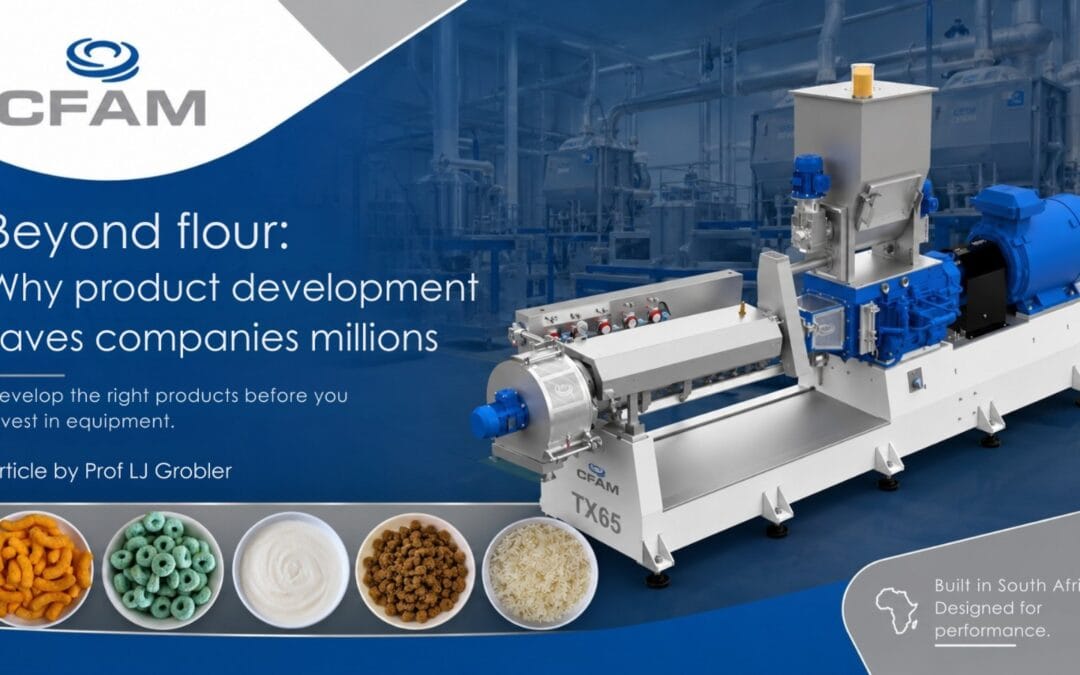
One of the biggest misconceptions in food manufacturing is that success begins with purchasing equipment. In reality, successful food businesses rarely start with an extruder, a factory or a production line. They start with understanding the consumer, developing the right product and validating that product before major investments are made.
Unfortunately, many companies do exactly the opposite. They identify an attractive opportunity, invest millions in a plant and only afterwards begin asking the critical questions. Does the product taste right? Is the texture acceptable? Will consumers actually buy it? Does it meet nutritional requirements? Can it be produced consistently and profitably? By the time these questions are answered, the money has already been spent and correcting mistakes can be extremely costly.
Product development changes this sequence entirely.
Instead of investing first and learning later, companies learn first and invest with confidence. It is essentially a structured process of reducing risk. Rather than relying on assumptions, decisions are based on testing, evaluation and evidence.
“The most important investment in a new food business is not the equipment. It is the knowledge gained before the equipment is purchased.” – Prof LJ Grobler
The product development process normally begins by understanding the market opportunity. Who is the consumer? What problem is the product intended to solve? Is the market looking for convenience, affordable nutrition, indulgence or improved health? What price point is acceptable, and how do competing products perform? These questions shape the direction of development and ensure that technical efforts remain aligned with commercial realities.
Once the opportunity has been defined, formulation work begins. Food scientists develop recipes designed to achieve the desired nutritional profile, taste, appearance and functionality. Ingredients are selected based on cost, availability, nutritional value and suitability for processing. In Africa, this often means exploring how locally available grains and legumes can be combined to create products that are both affordable and relevant to local consumers.
Rarely does the first recipe become the final product.
Formulations evolve through repeated testing and refinement. Processing conditions are adjusted and optimised. Moisture levels, screw configurations, temperatures, die designs and operating parameters all influence the final result. Small changes can significantly affect expansion, texture, density, flavour release and appearance.
This is where pilot-scale product development becomes invaluable.
Rather than experimenting on a large commercial plant, trials should be conducted on small commercial extruders designed according to the same principles as their larger counterparts. These systems provide realistic production conditions while using relatively small quantities of ingredients. New ideas can be evaluated quickly, alternative formulations can be compared economically and multiple processing conditions can be explored without exposing the business to unnecessary financial risk.
“Product development allows companies to fail cheaply, learn quickly and invest wisely. That is why it saves millions.” – Prof LJ Grobler
An equally important benefit of using small commercial extruders is the ability to scale up successfully. One of the greatest challenges in food manufacturing is reproducing a product developed in the laboratory on a large production line. Laboratory equipment often behaves very differently from industrial equipment, making direct scale-up difficult and unpredictable.
By developing products on small commercial extruders that operate according to the same engineering principles as full-scale plants, companies dramatically improve the likelihood of reproducing the same product at higher production rates. The knowledge gained during development becomes directly transferable to commercial production.
The product produced during development is therefore far more than an experimental sample.
It becomes the reference product.
Once the formulation and processing conditions have been optimised, the product should be formally evaluated and approved by the client. Taste, texture, appearance, nutritional characteristics and preparation behaviour are assessed against the original objectives. Only once everyone is satisfied should the product be signed off.
This sign-off stage is one of the most important milestones in the entire project.
It establishes a clear benchmark against which future production can be measured. The approved product effectively becomes the gold standard. When the commercial plant is eventually commissioned, the objective is no longer to discover what the product should look like. Instead, the objective is to reproduce the signed-off product at a higher throughput.
The commissioning process therefore shifts from product discovery to product replication.
This approach dramatically reduces risk. It shortens commissioning periods, minimises costly modifications and avoids disagreements regarding product quality. Both the supplier and the client know exactly what success looks like because they have already agreed on it.
The benefits extend well beyond the production department. Marketing teams gain access to product samples for consumer testing long before construction begins. Financial models become more accurate because yields and formulations have been validated. Procurement teams understand ingredient requirements, while training programmes can be built around proven operating procedures.
The entire organisation becomes aligned around a product that has already demonstrated its technical and commercial potential.
Without product development, companies are effectively building factories based on assumptions.
With product development, they are building factories around proven products.
The difference can determine whether a project succeeds or struggles.
At CFAM, we have seen how structured product development transforms ideas into commercial realities. Concepts discussed in meeting rooms evolve into products that are tested, refined and validated under practical operating conditions. Risks are reduced, confidence increases and investments become more secure.
“The purpose of product development is not simply to create products. It is to create certainty. When companies invest millions in commercial facilities, certainty becomes incredibly valuable. – Prof LJ Grobler
Africa’s food industry presents enormous opportunities. Consumers are seeking convenient foods, affordable nutrition and products tailored to local preferences. Millers are looking beyond flour towards breakfast cereals, snacks, instant porridges and nutritious meal solutions.
But innovation without validation is risky.
The future of successful food manufacturing will belong to companies that understand the importance of proving a product before building a factory around it. Product development does not slow innovation. It accelerates it. It improves quality, reduces risk and shortens the path to commercial success.
The future of African milling lies beyond flour.
It also lies beyond assumptions.
It lies in turning ideas into proven products before turning those products into factories.
#BeyondFlour #CFAMTechnologies #ProductDevelopment #FoodInnovation #PilotTrials #ExtrusionTechnology #FutureOfMilling #FoodManufacturing #ScaleUp #RiskReduction #ValueAddition #MadeInAfrica #TransformingAfrica #BuiltInAfricaForAfrica
por Caren Van Der Walt | Jul 22, 2026 | Blogue
By Prof LJ Grobler, Director, CFAM Technologies
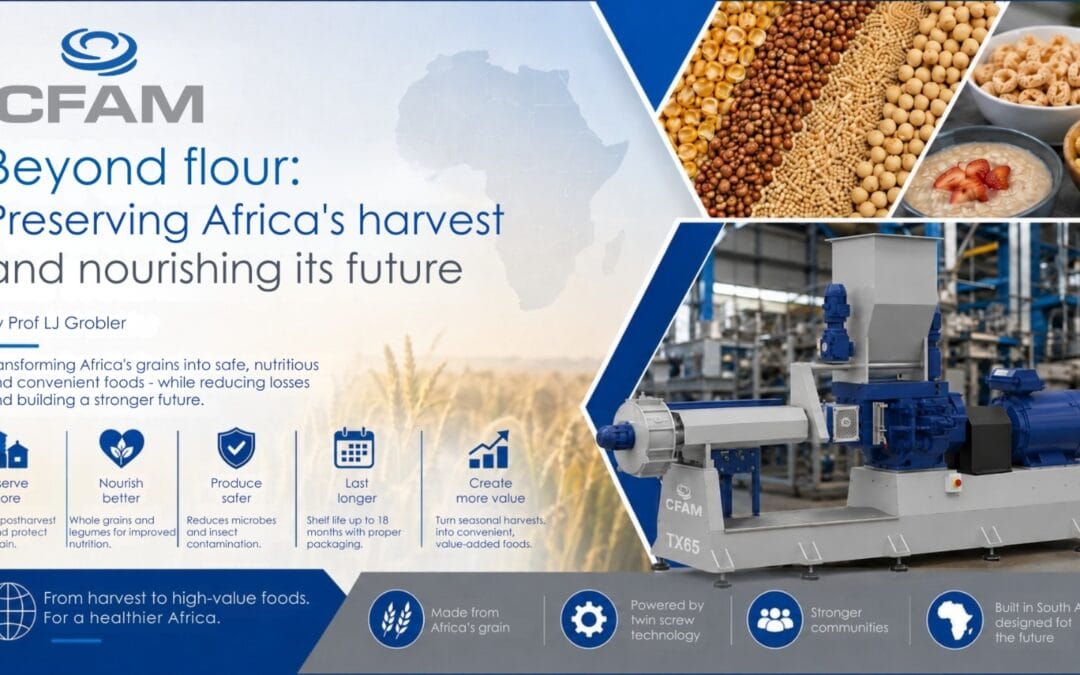
Every year, Africa’s farmers perform an extraordinary task. Across the continent, millions of tonnes of maize, sorghum, millet, wheat, rice and legumes are harvested from the soil to feed a growing population. Yet despite these efforts, millions of Africans continue to face food insecurity and poor nutrition. The challenge is not simply producing enough grain. The challenge is preserving its value and ensuring that it reaches consumers in a safe, nutritious and affordable form.
African agriculture is highly seasonal. During harvest periods there is often an abundance of grain, but maintaining its quality until the next harvest can be extremely difficult. Inadequate storage infrastructure exposes grain to moisture, insects, rodents and mould. Temperature fluctuations accelerate deterioration, and post-harvest losses remain a major challenge across the continent. Every year, valuable food produced through the hard work of farmers is downgraded, damaged or lost before it can fulfil its intended purpose.
Even the grain that eventually reaches consumers often undergoes processing methods that reduce some of its natural nutritional value. Traditional snack manufacturing provides a good example. Most expanded snacks are produced from maize grits, which require milling processes that remove the bran and germ from the grain. The remaining starchy endosperm produces the light, crispy textures consumers enjoy, but refinement comes at a nutritional cost.
The bran contains valuable dietary fibre, minerals and phytochemicals. The germ provides essential fatty acids, vitamins and important micronutrients. When these components are removed, some of the grain’s natural goodness is lost. Consumers still enjoy the snack, but they receive less of the nutrition originally present in the grain itself.
For many years this trade-off between nutrition and product quality was accepted as unavoidable. If manufacturers wanted attractive textures and consumer appeal, refinement was considered necessary.
Today, that reality is changing.
“For too long we believed we had to choose between nutrition and consumer appeal. Modern twin screw extrusion is proving that we can deliver both.” – Prof LJ Grobler
Twin screw extrusion is opening entirely new possibilities for Africa’s food industry. Unlike traditional approaches that depend heavily on refined ingredients, twin screw technology allows manufacturers to process whole grains and complex multi-grain formulations while maintaining the textures consumers expect and enjoy.
The same technology used to manufacture snacks can also produce nutritious breakfast cereals, instant porridges and complete meal solutions using whole grains and legumes. Instead of removing the most valuable parts of the grain, we can preserve them. Instead of relying on a single ingredient, we can combine maize, sorghum, millet, oats, rice and legumes to create products with enhanced nutritional profiles.
Rather than producing foods that simply satisfy hunger, we can produce foods that genuinely nourish people.
The benefits of whole grains are increasingly recognised around the world. Whole grains retain all three parts of the grain kernel – the bran, germ and endosperm. They provide dietary fibre that supports digestive health and contributes to feelings of fullness. They contain naturally occurring vitamins and minerals, including B vitamins, iron, magnesium and zinc. They also provide plant compounds and antioxidants associated with improved long-term health outcomes.
For children, whole grain foods can support healthy growth and development. For adults, they contribute to improved dietary quality and healthier lifestyles. For communities, they offer an opportunity to improve nutrition using foods that are both affordable and familiar.
Multi-grain formulations further strengthen these benefits. Maize provides energy and familiarity. Sorghum and millet contribute valuable micronutrients and are well adapted to African growing conditions. Oats offer soluble fibre and support satiety. Legumes such as soybeans and cowpeas improve protein quality by complementing the amino acid profiles of cereals.
Together, these ingredients create foods that are nutritionally stronger than the sum of their individual parts.
Perhaps most importantly, they make use of crops already grown by African farmers.
“Africa already grows the ingredients needed to nourish its people. Our opportunity lies in transforming those ingredients into foods that preserve their nutritional value and fit modern lifestyles.” – Prof LJ Grobler
Twin screw extrusion also offers significant food safety advantages. During extrusion, ingredients are exposed to high temperatures, intense pressures and severe mechanical energy over very short periods of time. These conditions effectively cook the product while substantially reducing microbial contamination.
Importantly for Africa’s grain supply chains, the process also destroys traces of insect infestation that may be present in stored grain. Eggs and larvae that could otherwise develop during storage are eliminated during extrusion, resulting in cleaner and safer products.
When these products are packaged in properly sealed, airtight packaging, shelf lives of up to eighteen months can be achieved, depending on the formulation and packaging system used.
This fundamentally changes how we think about food preservation.
Instead of attempting to store raw grain for extended periods while fighting insects and deterioration, seasonal harvests can be transformed shortly after harvest into shelf-stable, value-added foods that remain nutritious and safe throughout the year.
The benefits extend throughout the food system. Farmers gain more reliable markets for their crops. Millers create higher-value products and stronger brands. Retailers receive products with extended shelf life. Consumers gain access to convenient and nutritious foods regardless of season. Societies reduce losses associated with post-harvest deterioration.
Imagine an Africa where seasonal harvests are transformed into nutritious instant porridges for breakfast, wholesome cereals for school lunchboxes, and convenient multi-grain meals for dinner. Imagine school feeding programmes supplied with shelf-stable products rich in fibre and plant proteins. Imagine communities less vulnerable to seasonal shortages because harvests have been converted into foods that remain stable for many months.
This is not an impossible dream.
The technology already exists.
It is already operating in Africa.
CFAM’s twin screw extruders were developed in South Africa specifically to address African realities and have been installed across the continent to process foods and feeds under demanding local conditions. Built in Africa for Africa, they demonstrate that world-class innovation can emerge from the continent itself to solve African challenges.
“The future of Africa’s food system will depend not only on how much grain we harvest, but on how wisely we preserve and utilise that harvest. Twin screw extrusion allows us to convert seasonal abundance into year-round nutrition.” – Prof LJ Grobler
Africa’s future will not be secured by grain production alone. It will depend on our ability to preserve what we harvest, minimise losses and convert local crops into foods that improve lives.
Whole grain and multi-grain extruded foods offer exactly that opportunity. They provide better nutrition for children during critical stages of development. They help families access affordable and convenient meals. They support healthier diets for growing urban populations while strengthening local agricultural value chains and creating new business opportunities for millers.
Perhaps most importantly, they help ensure that the hard work of African farmers does not disappear in storage facilities lost to insects and deterioration, but instead reaches consumers as safe, nutritious food.
The future of African milling lies beyond flour.
It lies in preserving Africa’s harvest and transforming it into nourishment for generations to come.
#BeyondFlour #CFAMTechnologies #WholeGrains #MultiGrainNutrition #TwinScrewExtrusion #FeedAfrica #FoodSecurity #PostHarvestLosses #AffordableNutrition #FutureOfMilling #FoodInnovation #MadeInAfrica #ValueAddition #TransformingAfrica #NutritionForAll #BuiltInAfricaForAfrica
por Caren Van Der Walt | Jul 14, 2026 | Blogue
By Prof LJ Grobler, Director, CFAM Technologies
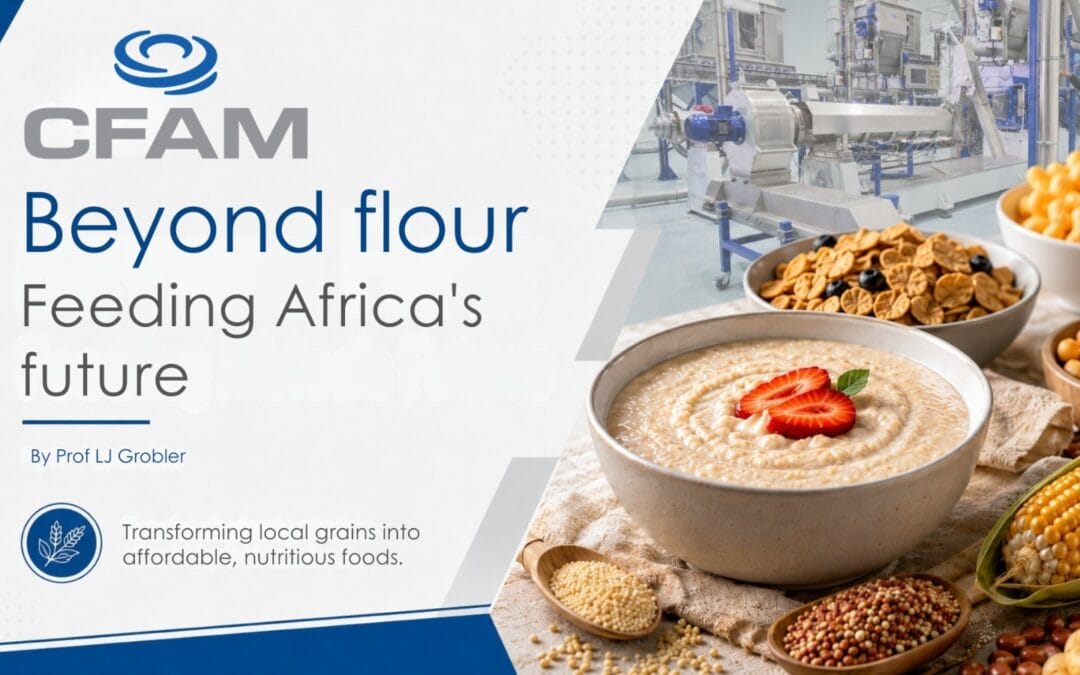
Africa’s future will be shaped by how effectively we feed a rapidly growing and increasingly urban population. Today, the continent is home to approximately 1.5 billion people, and by 2050 that number is expected to approach 2.5 billion. As more people move into cities, lifestyles are becoming busier and consumers are demanding foods that are safe, nutritious, affordable and convenient. Meeting these needs will require more than producing additional grain. It will require technologies capable of transforming Africa’s agricultural resources into practical nutritional solutions that fit modern life.
Extrusion technology is one of those solutions. For decades it has been used to produce breakfast cereals, snacks, pet foods and instant porridges. Today, however, extrusion offers Africa an opportunity to create affordable, nutritious foods using locally grown grains and legumes while building sustainable food industries. It enables millers to move beyond commodities and become manufacturers of value-added nutritional products.
A question often asked is: What is the difference between single screw and twin screw extrusion, and why does it matter?
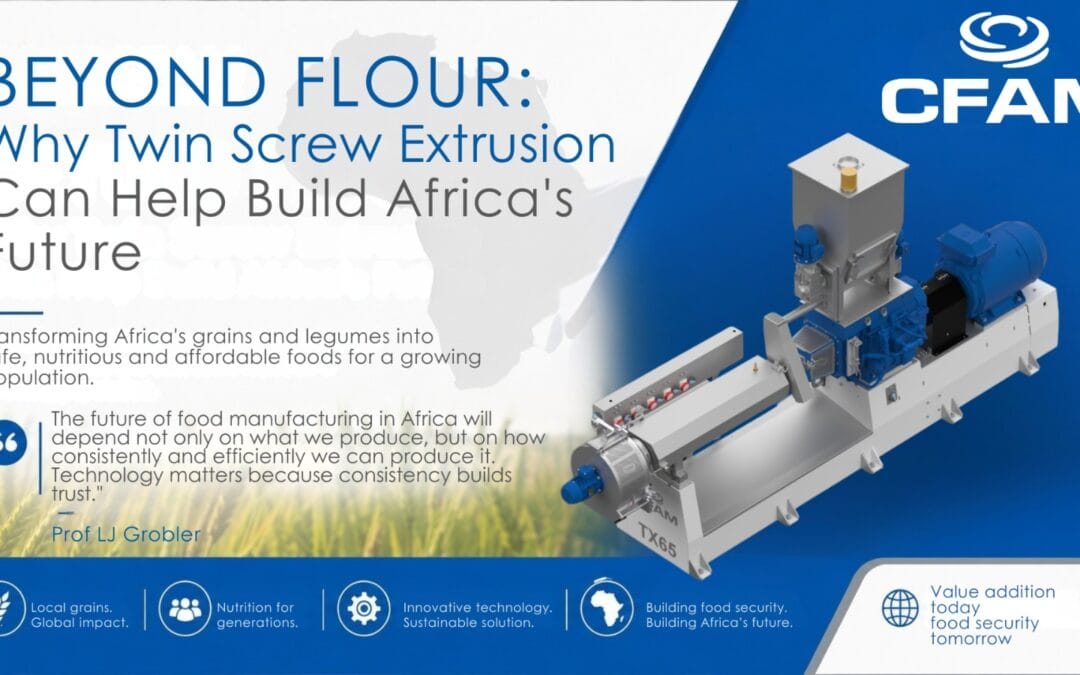
“The future of food manufacturing in Africa will depend not only on what we produce, but on how consistently and efficiently we can produce it. Technology matters because consistency builds trust.” – Prof LJ Grobler
Both single screw and twin screw extruders work on the same principle. Ingredients enter the barrel and are subjected to intense mixing, pressure and friction. This mechanical energy rapidly generates heat, cooking the product in seconds. During this process, starches are gelatinised, proteins are modified, digestibility improves and microbial contamination is reduced. The result is a safe, shelf-stable product with improved functionality.
The key difference lies in how material moves through the extruder. In a single screw extruder, the flow rate depends largely on the viscosity of the material being processed. Viscosity is influenced by particle size, moisture content, ingredient composition, fibre levels, protein content and the natural variability of raw materials. When these factors change, viscosity changes. This affects the rate of product flow through the barrel, which influences residence time and ultimately the cooking conditions. As a result, product characteristics such as expansion, density and texture may vary.
This does not mean single screw extrusion is inferior. Single screw systems remain highly effective and continue to provide excellent solutions for many traditional applications. Maize-based snacks, certain breakfast cereals and numerous pet food products are manufactured very successfully using this technology. For relatively simple formulations and consistent raw materials, single screw extrusion often provides a robust and cost-effective option.
Twin screw extrusion, however, offers a different approach. Rather than relying primarily on viscosity to transport material, twin screw extruders function much more like positive displacement pumps. The intermeshing screws actively convey material through the machine, much like twin screw compressors consistently move air regardless of changing conditions. Even when viscosity changes, the throughput remains remarkably stable.
The result is more consistent residence times, more predictable cooking conditions and improved product uniformity.
“Twin screw extrusion provides manufacturers with a level of process control that becomes increasingly important as we move towards more sophisticated nutritional products. Consistency is no longer a luxury. It is a necessity.” – Prof LJ Grobler
This distinction becomes increasingly important when considering Africa’s future food needs. The products required to nourish a growing continent will rely on more complex formulations. Multi-grain blends combining maize, sorghum, millet, oats and rice offer improved nutritional diversity. Whole grain products provide higher fibre levels and preserve naturally occurring nutrients. High-protein foods incorporating soybeans and other legumes can improve nutritional quality while remaining affordable.
These formulations are more difficult to process because higher fibre levels, elevated protein contents and whole grain ingredients all influence viscosity. Under these circumstances, the process stability offered by twin screw extrusion becomes a major advantage.
Twin screw systems excel in handling ingredient diversity. They perform exceptionally well with multi-grain formulations, whole grain products and high-protein applications. They provide manufacturers with the flexibility to innovate without sacrificing consistency. This is particularly relevant for products that could help shape Africa’s future, including protein-enriched instant porridges, school feeding meals based on grains and legumes, nutritious foods for mothers and children, whole grain snacks and breakfast cereals incorporating traditional African grains.
What makes this story especially meaningful is that Africa does not have to import this capability from elsewhere. CFAM Technologies started developing its first twin screw extruder in 1998 at the North-West University in South Africa with a clear objective: to create extrusion technology suited to African conditions and the needs of developing countries. The first commercial extruder was sold to support the production of instant porridge for a community feeding programme, and the TX-series that followed earned the reputation of being “Built in Africa for Africa.” (CFAM International)
Today, CFAM twin screw extruders operate in food and feed plants across Southern Africa and beyond. The systems have been designed to cope with the realities of African manufacturing, including variable raw material quality, demanding operating environments and the need for practical maintenance solutions using locally available components. CFAM has installed and commissioned more twin screw food and feed extruders in Southern Africa than any other extruder manufacturer and now serves clients across multiple continents. (LinkedIn)
“Twin screw extrusion allows us to take Africa’s agricultural diversity and convert it into practical nutritional solutions. It gives us the flexibility to innovate and the consistency to scale. Most importantly, it proves that world-class technology can be developed in Africa to solve African challenges.” – Prof LJ Grobler
Africa already grows many of the crops required to nourish its people. The continent has entrepreneurial businesses, innovative millers and consumers increasingly seeking foods that combine convenience with better nutrition. What is needed is the technology capable of transforming these resources into products designed for modern realities – foods that prepare quickly, remain affordable, deliver meaningful nutrition and earn consumer trust through consistency.
Single screw extrusion will continue to play an important role and remains an excellent solution for many traditional applications. However, as Africa moves towards greater ingredient diversity, more sophisticated nutritional formulations and higher expectations of quality, twin screw extrusion offers capabilities that become increasingly valuable.
The future of African milling lies beyond flour. It lies in transforming local crops into foods that nourish a growing continent while creating profitable and sustainable businesses. And if the challenge before us is to feed Africa with consistency, flexibility and innovation, twin screw extrusion may prove to be one of the technologies that helps build Africa’s future.
#BeyondFlour #CFAMTechnologies #BuiltInAfricaForAfrica #TwinScrewExtrusion #ExtrusionTechnology #FeedAfrica #FoodSecurity #AffordableNutrition #FutureOfMilling #MultiGrainNutrition #HighProteinFoods #FoodInnovation #MadeInAfrica #ValueAddition #TransformingAfrica #FoodManufacturing
por Caren Van Der Walt | Jul 6, 2026 | Blogue
By Prof LJ Grobler, Director, CFAM Technologies
Africa’s future will be shaped by many factors, but perhaps none more important than how we feed our people. Today, the continent is home to approximately 1.5 billion people. By 2050, that number is expected to approach 2.5 billion. At the same time, Africa is urbanising faster than almost any other region in the world. Millions of people are moving into cities in search of opportunity, and with urbanisation comes a fundamental shift in the way food is consumed.
People have less time than previous generations. Parents work longer hours, children spend more time at school, and commuting often consumes a significant part of the day. Preparing meals from scratch becomes increasingly difficult. Yet despite these changing lifestyles, one thing remains constant. People still need food that is safe, affordable and nutritious.
The challenge facing Africa is therefore not simply how to produce enough food. The challenge is how to provide good food that fits the realities of modern African life.
“Africa does not lack agricultural potential. The challenge is transforming what we grow into foods that nourish people affordably, conveniently and at scale. Extrusion gives us the ability to do exactly that.” – Prof LJ Grobler
For decades, discussions around food security have focused primarily on increasing agricultural production. Producing more maize, more wheat and more rice remains important. However, as populations grow and lifestyles evolve, food processing becomes equally important. The grains we grow must be transformed into foods that people can prepare quickly, store safely and afford regularly.
This is where extrusion technology has the potential to transform the continent.
Extrusion combines heat, moisture and mechanical energy to convert grains and legumes into products that are safe, shelf-stable and easy to prepare. The process improves digestibility, reduces microbial contamination and creates foods that can often be prepared in minutes rather than hours. In simple terms, extrusion transforms agricultural crops into practical nutritional solutions.
The exciting reality is that Africa already produces many of the ingredients needed to make this possible. Maize remains the dominant staple across much of the continent. Sorghum and millet have nourished African communities for centuries. Rice consumption continues to increase, while wheat remains an important component of many diets. Legumes such as soybeans, cowpeas and Bambara groundnuts offer valuable and affordable sources of protein.
Individually, these ingredients provide important nutritional benefits. Combined intelligently, they become even more powerful.
By blending grains and legumes, manufacturers can produce multi-grain foods with improved protein quality, higher fibre levels and enhanced micronutrient content. Products become more nutritious while remaining affordable and rooted in local agriculture. Affordable nutrition does not have to depend on expensive imported ingredients, nor does it always require costly animal proteins.
For many African families, meat is consumed occasionally rather than daily because of its cost. Yet carefully formulated grain and legume combinations can provide meaningful nutritional value at a fraction of the price. This does not mean replacing meat altogether. It means expanding access to quality nutrition for millions of households that need practical and affordable alternatives.
Breakfast presents one of the greatest opportunities. Too many children leave home without eating a nutritious meal because mornings are rushed and preparation takes time. Instant porridges produced through extrusion can be prepared within minutes using only hot water. A mother rushing to work can provide her family with a nourishing breakfast before the day begins. A child can start the school day with energy and essential nutrients. A busy professional can enjoy convenience without sacrificing health.
Lunch presents another important opportunity. Across Africa, school feeding programmes play a critical role in supporting education and nutrition. Hospitals, factories and community kitchens face the challenge of feeding large numbers of people efficiently and consistently. Extruded products can be formulated specifically for these environments. They require minimal preparation, maintain consistent quality and can be designed to meet defined nutritional requirements.
Nutritious meals can therefore be delivered at scale. The impact extends far beyond the dining table. Better nutrition supports improved concentration, stronger immune systems and enhanced educational outcomes.
Dinner, too, can be transformed. Consumers still value traditional meals and familiar eating experiences. They seek comfort, satisfaction and foods that bring families together. Modern extrusion technology allows products to be developed with different textures and functionalities. Some products can be prepared as smooth instant porridges. Others can provide thick, hearty meals with stew-like consistencies that resemble traditional dishes.
Families can enjoy satisfying evening meals without spending hours preparing them. Cooking times decrease, fuel consumption falls and convenience improves, while the familiar comfort of home-style meals remains.
“Extrusion allows us to produce breakfast, lunch and dinner solutions from the same technology platform. It gives manufacturers the ability to meet consumers wherever they are in their daily lives.” – Prof LJ Grobler
One of extrusion’s greatest strengths is its flexibility. Products can be formulated to meet very specific nutritional objectives. Protein levels can be increased. Fibre content can be adjusted. Vitamins and minerals can be added according to defined requirements. Whether the objective is a complementary food for infants, a school meal, an emergency relief product or a nutritious family meal, extrusion provides the ability to meet those needs.
Post-extrusion fortification strengthens this capability even further. Many vitamins are sensitive to heat and may lose potency during conventional processing. By adding vitamins and minerals after the cooking process has been completed, manufacturers can improve nutrient retention and ensure that consumers receive the nutritional benefits intended by the formulation.
The result is food that not only fills stomachs but genuinely improves health. Food that helps address micronutrient deficiencies. Food that contributes to healthier communities. Food that changes lives.
There is also a powerful economic story behind this opportunity. Africa’s growing population represents one of the world’s largest emerging consumer markets. Demand for convenient and nutritious foods will continue to rise. Millers have an opportunity to move beyond commodities and become manufacturers of branded nutritional solutions. Farmers can benefit from increased demand for locally grown crops. Employment opportunities can be created through value-added food processing.
Food security and economic development can advance together.
Too often, discussions about feeding Africa focus only on the magnitude of the challenge. Perhaps it is time to focus on the opportunity instead. Africa has fertile land. Africa grows diverse crops. Africa has entrepreneurs willing to innovate. Africa has consumers looking for better solutions.
What we need is the ability to transform these resources into foods designed for modern realities.
Extrusion provides that bridge. It allows us to convert the grains and legumes already grown across the continent into safe, affordable and nutritious meals for breakfast, lunch and dinner. It enables us to improve nutrition without sacrificing convenience. It supports local agriculture while creating profitable businesses. Most importantly, it gives us an opportunity to shape a healthier future.
“The future of Africa will be shaped not only by how much food we produce, but by how effectively we convert our agricultural resources into foods that improve lives. Extrusion has the potential to become one of the most important tools in that journey.” – Prof LJ Grobler
Africa’s population is growing. Its cities are expanding. Its needs are changing.
The future of African milling lies beyond flour. It lies in creating foods that nourish people, strengthen communities and unlock the full potential of the continent’s agricultural resources.
The opportunity before us is extraordinary.
The question is not whether Africa can feed its future.
The question is whether we are bold enough to rethink how we do it.
#BeyondFlour #CFAMTechnologies #FeedAfrica #FoodSecurity #AffordableNutrition #ExtrusionTechnology #InstantPorridge #SchoolFeeding #MultiGrainNutrition #FutureOfMilling #FoodInnovation #MadeInAfrica #NutritionForAll #ValueAddition #TransformingAfrica #FoodManufacturing
por Caren Van Der Walt | Jun 30, 2026 | Blogue
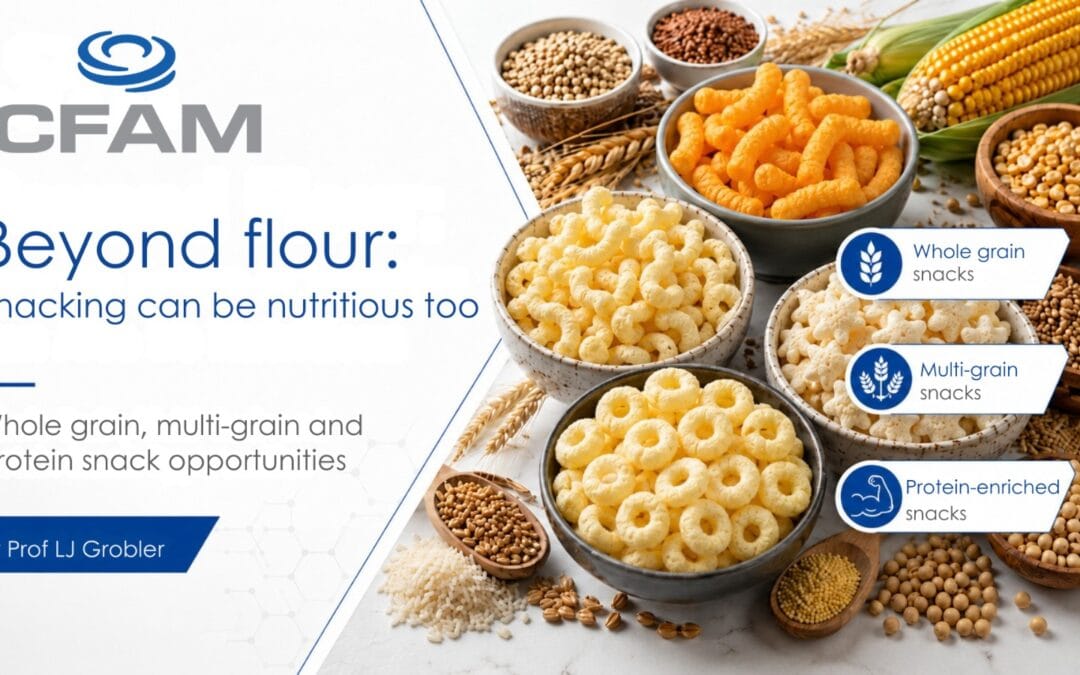
By Prof LJ Grobler, Director, CFAM Technologies
For many years, snacks have carried a bad reputation. They were often viewed as foods that tasted good but offered little nutritional value. Parents worried about too much fat and salt, nutritionists criticised their empty calories, and consumers accepted that enjoying a snack meant compromising on health.
That perception is beginning to change.
Today’s consumers still want snacks that are crunchy, tasty and convenient, but they increasingly expect more from the foods they eat. They want products with better ingredients, higher nutritional value and labels they can feel good about. They want foods that fit into healthier lifestyles without sacrificing enjoyment.
This shift in consumer thinking presents an enormous opportunity for African millers.
The snack market across Africa continues to grow. Urbanisation, changing lifestyles and younger populations are driving demand for foods that can be eaten on the move, packed into lunchboxes or enjoyed between meals. The reality is that consumers are going to continue snacking. The question is no longer whether people should snack. The real question is whether we can give them better snacks.
“Consumers will continue to snack. The opportunity is not stopping people from eating snacks, but giving them better snacks to eat.”
– Prof LJ Grobler
Traditionally, many expanded snacks have been produced using refined maize grits. These ingredients provide the light texture and crispness consumers enjoy. However, refining removes some of the fibre and nutrients naturally present in whole grains.
What if the same enjoyable texture could be achieved using more nutritious ingredients?
Advances in twin screw extrusion technology are making this possible.
One of the most exciting developments in recent years has been the ability to produce snacks using whole grain ingredients while maintaining the texture consumers expect. Historically, this has been difficult. Whole grains contain higher levels of fibre, which can interfere with expansion and produce denser products.
For this reason, manufacturers often relied on refined ingredients.
Twin screw extrusion changes that.
Through improved control of mixing, shear and processing conditions, twin screw extruders can successfully process whole grain formulations while producing snacks that remain light, crispy and enjoyable.
Consumers can therefore enjoy products with the same crunch and eating experience they love, while benefiting from improved nutritional profiles.
This is an important breakthrough.
“One of the most exciting developments in extrusion is our ability to produce whole grain snacks with the same consumer appeal as conventional snacks. We no longer have to choose between nutrition and enjoyment.”
– Prof LJ Grobler
The opportunities extend even further.
Protein has become one of the most sought-after nutritional benefits in modern foods. Consumers increasingly associate higher protein levels with energy, satiety and healthier lifestyles.
Twin screw extrusion allows snack manufacturers to incorporate protein-rich ingredients such as soy flour and other legume-based materials into snack formulations. The result is a new generation of products that do more than simply satisfy cravings.
They can contribute meaningful nutritional value.
Protein-enriched snacks can help consumers feel fuller for longer while supporting improved dietary quality. Parents looking for better lunchbox options, active consumers seeking healthier choices and families wanting greater value from their food purchases all represent growing markets for these products.
Another exciting opportunity lies in multi-grain snacks.
Africa is blessed with a diversity of grains. Maize, sorghum, millet, rice and wheat are widely cultivated across the continent. Each brings its own nutritional strengths, flavour characteristics and cultural significance.
By combining these grains, manufacturers can create products with improved nutrient diversity and unique taste profiles.
Multi-grain snacks also create opportunities to celebrate local agriculture. Instead of relying exclusively on imported product concepts, manufacturers can build brands around ingredients grown by African farmers and familiar to African consumers.
This strengthens local value chains while creating differentiated products that stand out in the marketplace.
Importantly, healthier snacks do not have to be boring.
Consumers choose snacks because they enjoy them. Taste, texture and appearance remain essential. No amount of nutritional messaging will compensate for a poor eating experience.
Extrusion technology provides manufacturers with enormous flexibility to address this challenge. Products can be developed in different shapes, sizes and textures. Seasonings can be adapted to local tastes. Expansion levels can be adjusted to create anything from airy puffs to dense, crunchy bites.
Nutrition and indulgence no longer need to be opposites.
The commercial opportunity for millers is substantial.
Snack products generally command higher margins than commodity products. They allow businesses to move beyond competing only on price and instead compete through innovation and brand development.
Millers can build brands associated with better ingredients, healthier choices and modern lifestyles. They can connect with parents seeking improved options for their children and younger consumers who increasingly expect products that align with their health aspirations.
For milling businesses looking to diversify, snacks offer an attractive entry point into value-added food manufacturing.
“The future of snacking belongs to companies that understand consumers want products that are both enjoyable and responsible. The winners will be those who make healthier choices easier and more appealing.”
– Prof LJ Grobler
Healthier snacks also align with broader public health goals. Improving the nutritional quality of foods that consumers already eat regularly can have a meaningful impact over time. No single product will solve Africa’s nutritional challenges, but making everyday foods better is an important step in the right direction.
Consumers are not going to stop snacking.
Children will continue asking for treats after school. Busy professionals will continue reaching for convenient foods between meetings. Families will continue sharing snacks during moments of connection and celebration.
The opportunity before the food industry is therefore not to eliminate snacks.
It is to reinvent them.
The future of African milling lies beyond flour. It lies in transforming local grains into products that deliver greater value, stronger brands and better nutrition.
Through twin screw extrusion, we now have the ability to produce whole grain snacks with the same appealing textures as traditional products, multi-grain snacks that celebrate Africa’s agricultural diversity, and higher-protein snacks that support healthier lifestyles.
Perhaps the future of snacking is not something we should fear.
Perhaps it is something we should embrace.
Because the future of snacking can be both delicious and nutritious.
And for African millers prepared to innovate, that future has already arrived.
#BeyondFlour #CFAMTechnologies #HealthySnacking #TwinScrewExtrusion #WholeGrainSnacks #ProteinSnacks #MultiGrainSnacks #FoodInnovation #FutureOfMilling #ValueAddition #AfricanFoodIndustry #MadeInAfrica #FoodManufacturing #NutritionInnovation #BetterSnacking